
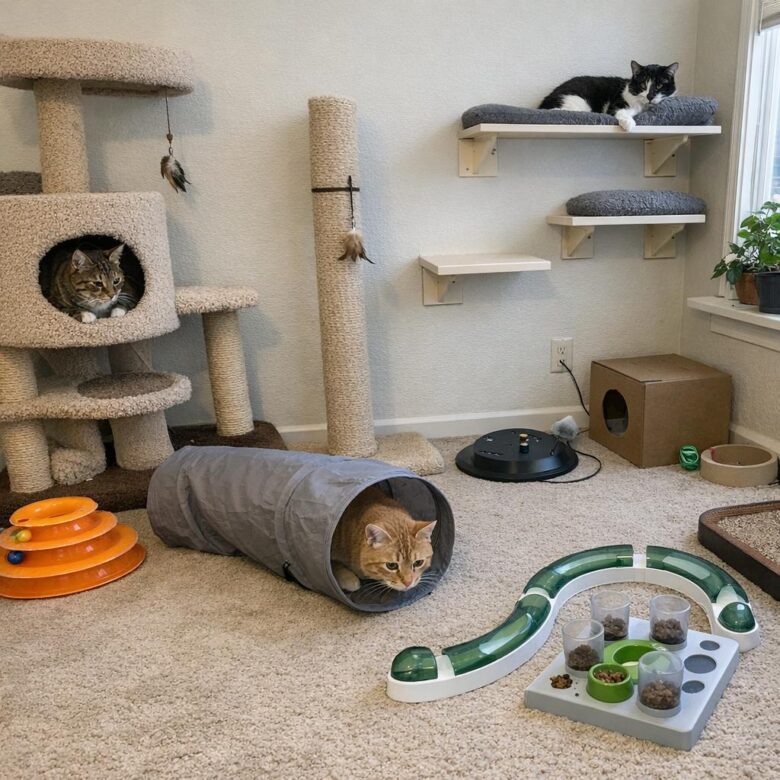
Is your indoor cat truly relaxed-or just quietly bored?
Life indoors keeps cats safer, but it can also limit the hunting, climbing, scratching, and exploring their bodies are built for.
When those instincts have nowhere to go, stress can show up as overgrooming, midnight zoomies, aggression, hiding, or destructive scratching.
The good news: with the right mix of play, enrichment, routine, and calming spaces, you can help your indoor cat stay active, confident, and genuinely content.
Why Indoor Cats Need Daily Enrichment for Exercise, Confidence, and Stress Relief
Indoor cats are safer from traffic, predators, and disease, but a quiet home can also become predictable fast. Without daily enrichment, many cats gain weight, sleep excessively, scratch furniture, or develop stress-related behaviors like overgrooming and hiding. Exercise is not just about burning calories; it gives cats a healthy outlet for hunting, climbing, chasing, and problem-solving.
In real homes, I often see shy cats become more confident when their routine includes small, repeatable challenges. For example, placing dry food in a puzzle feeder instead of a bowl can turn breakfast into a five-minute “hunt,” while a window perch gives a nervous cat a safe place to watch birds and people without feeling exposed. These low-cost cat enrichment tools can reduce boredom before it turns into a behavior problem that may require a veterinary visit or cat behavior consultation.
Daily enrichment works best when it matches your cat’s age, health, and personality. A young cat may need wand toy sessions and climbing shelves, while a senior cat may prefer gentle food puzzles, soft tunnels, or a heated bed near a window. Useful options include:
- Interactive cat toys, puzzle feeders, and treat-dispensing balls for mental stimulation
- Cat trees, wall shelves, and scratching posts for safe climbing and territory control
- Smart pet cameras like Petcube to monitor activity and check stress behaviors while you are away
The goal is simple: give your cat choices every day. Even two short play sessions, a rotated toy, and one new scent-safe activity can make an indoor cat feel more secure, active, and emotionally balanced.
How to Build an Indoor Cat Activity Routine with Play, Climbing, Hunting Games, and Puzzle Feeders
A good indoor cat activity routine should feel like a mini “hunt, catch, eat, rest” cycle. Instead of one long play session, aim for two or three short sessions daily, especially before meals, because most cats stay more engaged when play has a clear reward.
Start with 10 minutes of interactive cat toys, such as a wand toy or feather teaser, and move it like real prey: hide it behind furniture, pause, then let your cat pounce. In real homes, I often see cats lose interest when the toy is waved in their face, but they chase hard when it disappears around a corner.
- Morning: Use a wand toy, then serve breakfast in a puzzle feeder.
- Afternoon: Encourage climbing with a cat tree, wall shelves, or a window perch.
- Evening: Run a hunting game, then offer a small meal or treat reward.
For food-motivated cats, puzzle feeders like the Catit Senses 2.0 Food Tree can slow eating, reduce boredom, and add mental stimulation without needing expensive equipment. If your cat is new to food puzzles, keep it easy at first so they do not get frustrated and walk away.
Climbing is just as important as running. A sturdy cat tree, sisal scratching post, or secure window hammock gives indoor cats vertical territory, which can lower tension in multi-cat homes and make small apartments feel larger from a cat’s point of view.
Common Mistakes That Make Indoor Cats Bored, Anxious, or Less Active
One of the biggest mistakes is giving indoor cats toys but no routine. A basket full of cat toys means very little if your cat never gets interactive play, climbing time, or a predictable feeding schedule.
Many owners also rely too much on free-feeding, which removes a cat’s natural “hunt, eat, rest” rhythm. Using a puzzle feeder, automatic cat feeder, or treat ball can make meals more mentally stimulating and help reduce overeating, especially in less active indoor cats.
- Leaving the same toys out every day instead of rotating them weekly
- Placing the litter box, food bowl, and resting area too close together
- Ignoring vertical space, such as cat trees, shelves, and window perches
A common real-world example is a cat that sleeps all day, then becomes noisy or destructive at night. In many cases, the problem is not “bad behavior” but unused energy, poor environmental enrichment, or stress from a boring indoor setup.
Another mistake is overlooking small stress signals, such as hiding, overgrooming, urine marking, or avoiding certain rooms. If these behaviors appear suddenly, it is worth speaking with a veterinarian because pain, urinary issues, or anxiety may be involved, and pet insurance may help with diagnostic costs depending on the policy.
Simple tools can make a noticeable difference. A quality cat tree, window hammock, water fountain, or an interactive toy from Chewy can turn unused space into daily enrichment without making your home feel cluttered.
Summary of Recommendations
An active, calm indoor cat is built through consistency, not complexity. Choose a few enrichment ideas your cat genuinely enjoys, rotate them regularly, and make daily movement part of the home routine. If your cat seems bored, restless, or withdrawn, start with small changes: more vertical space, short play sessions, puzzle feeding, and quiet resting areas.
- Pick activities that match your cat’s age, confidence, and energy level.
- Watch behavior closely-stress often shows up as hiding, overgrooming, or appetite changes.
- When in doubt, ask your veterinarian before assuming it is “just boredom.”

Dr. Julian Aris is a Doctor of Veterinary Science and a certified safety consultant. Known for his “prevention-first” philosophy, he built Aid to Animals as a roadmap for modern pet owners. Dr. Aris combines clinical expertise in preventive health with a practical approach to home safety and behavioral training. His focus is on maximizing the longevity of the animal-human bond by giving owners the tools to identify risks before they become emergencies and optimizing daily care through evidence-based nutrition.